סיור קולי וחזותי
Audio & Visual Tour
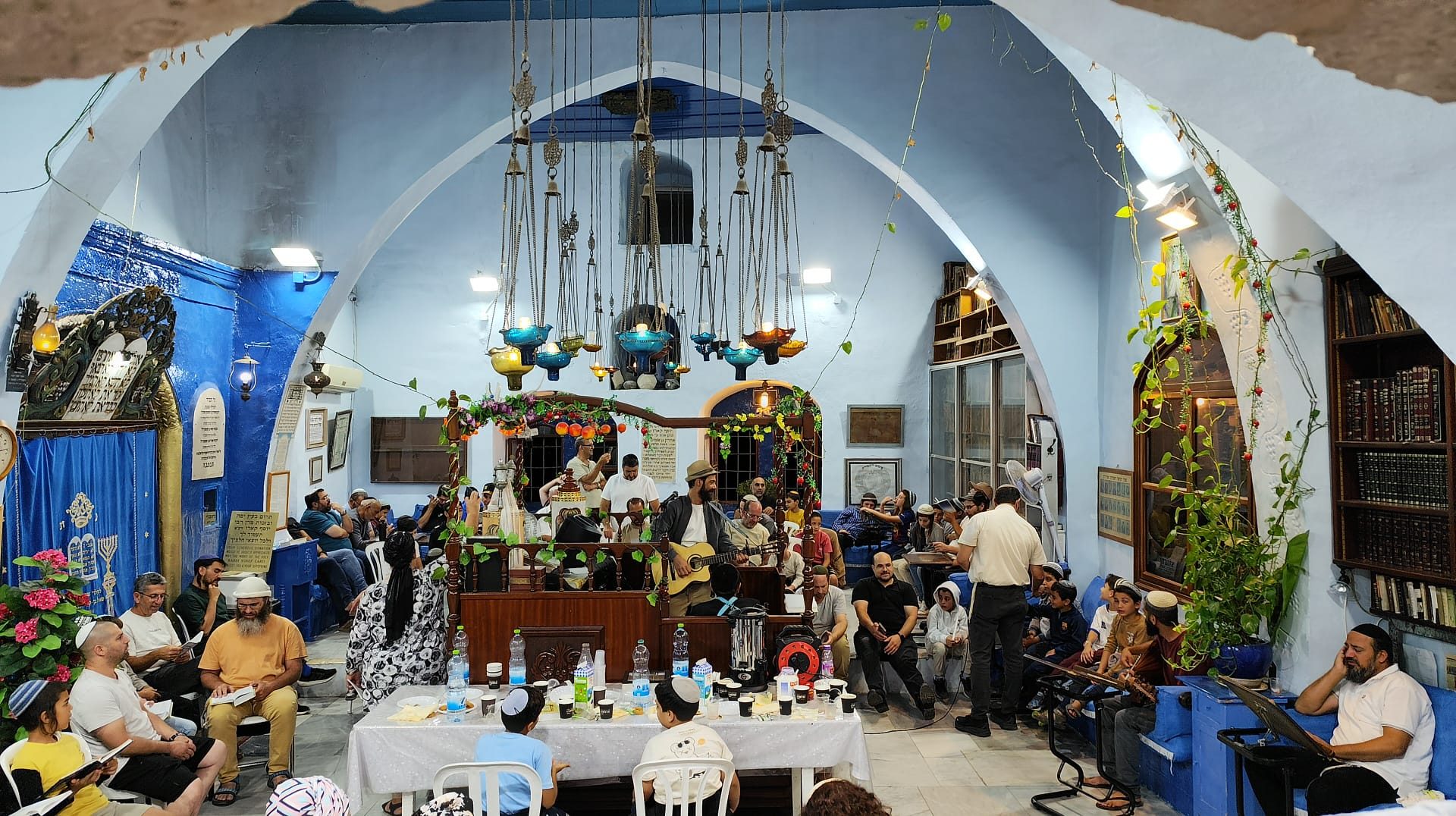
Walk through the synagogue of Maran at your own pace: seven short stops, from the door on Beit Yosef Street to the window by the ark.
Please use headphones inside the prayer hall.
Audio narration for each stop is being recorded. Until it is ready, read each stop as you walk.
1. At the door
You are standing on Beit Yosef Street, named for Maran’s great work. The painted sign on the door reads: “The Ancient Synagogue Named for Rabbi Yosef Caro, Author of the Shulchan Aruch.” Please enter modestly dressed.
2. Who was Maran?
Rabbi Yosef Caro was born in 1488, by most accounts in Toledo, Spain, and grew up as a child of the expulsion in the Ottoman lands. He spent some twenty years writing the Beit Yosef, which traces every law back to its sources, and settled in Tzfat around 1536. From it he drew the Shulchan Aruch, first printed in Venice in 1565 — the code of Jewish law still followed across the Jewish world. He passed away in Tzfat on 13 Nisan 5335 (1575).
3. The beit midrash of Maran
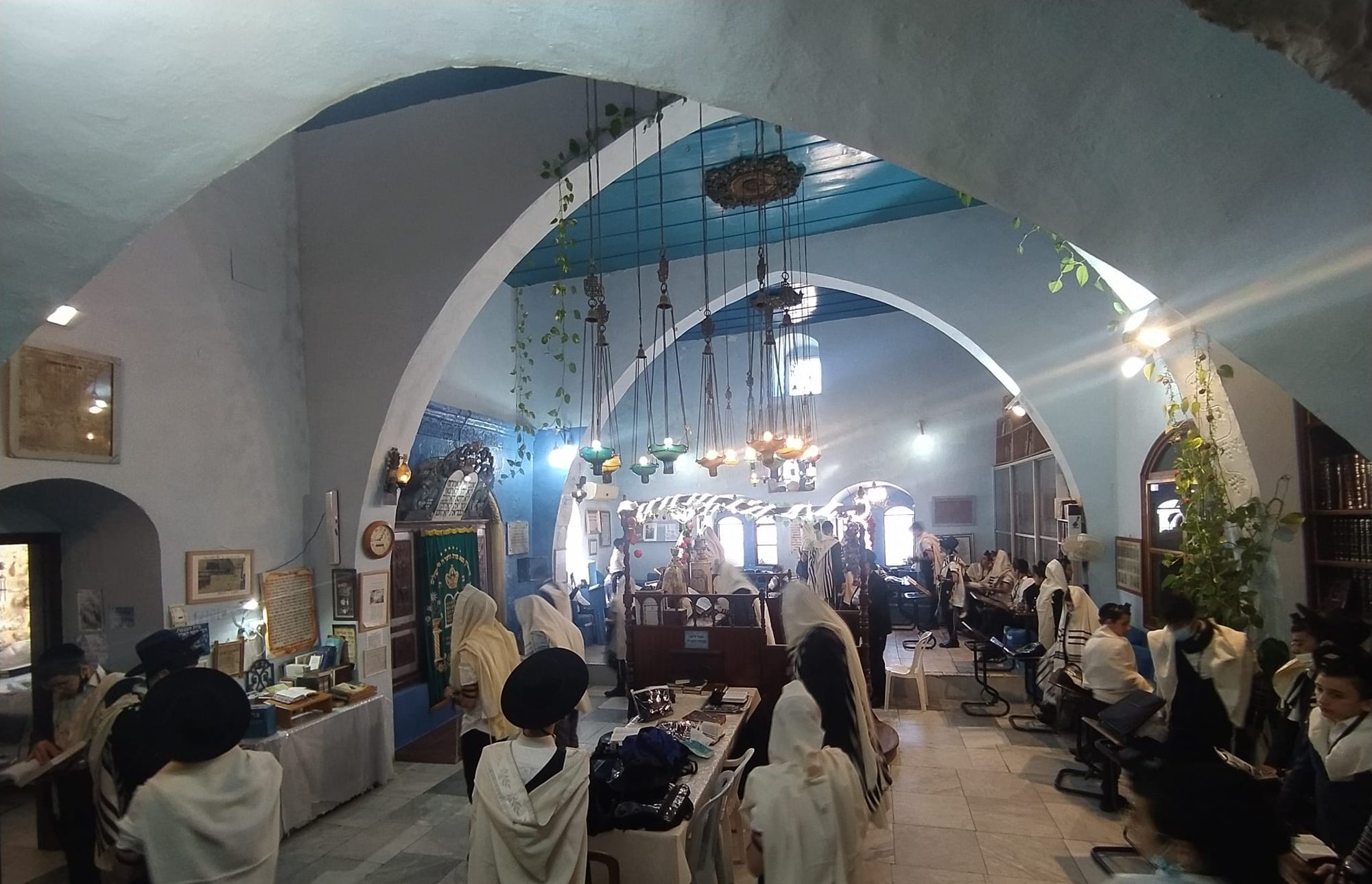
By tradition this was Maran’s beit midrash, the house of study where he taught, judged and wrote. A Yemenite traveller who came on a Shabbat around 1567 saw the aged sage seated on a chair, expounding the Torah before some two hundred students on benches.
4. Lamps under a blue ceiling
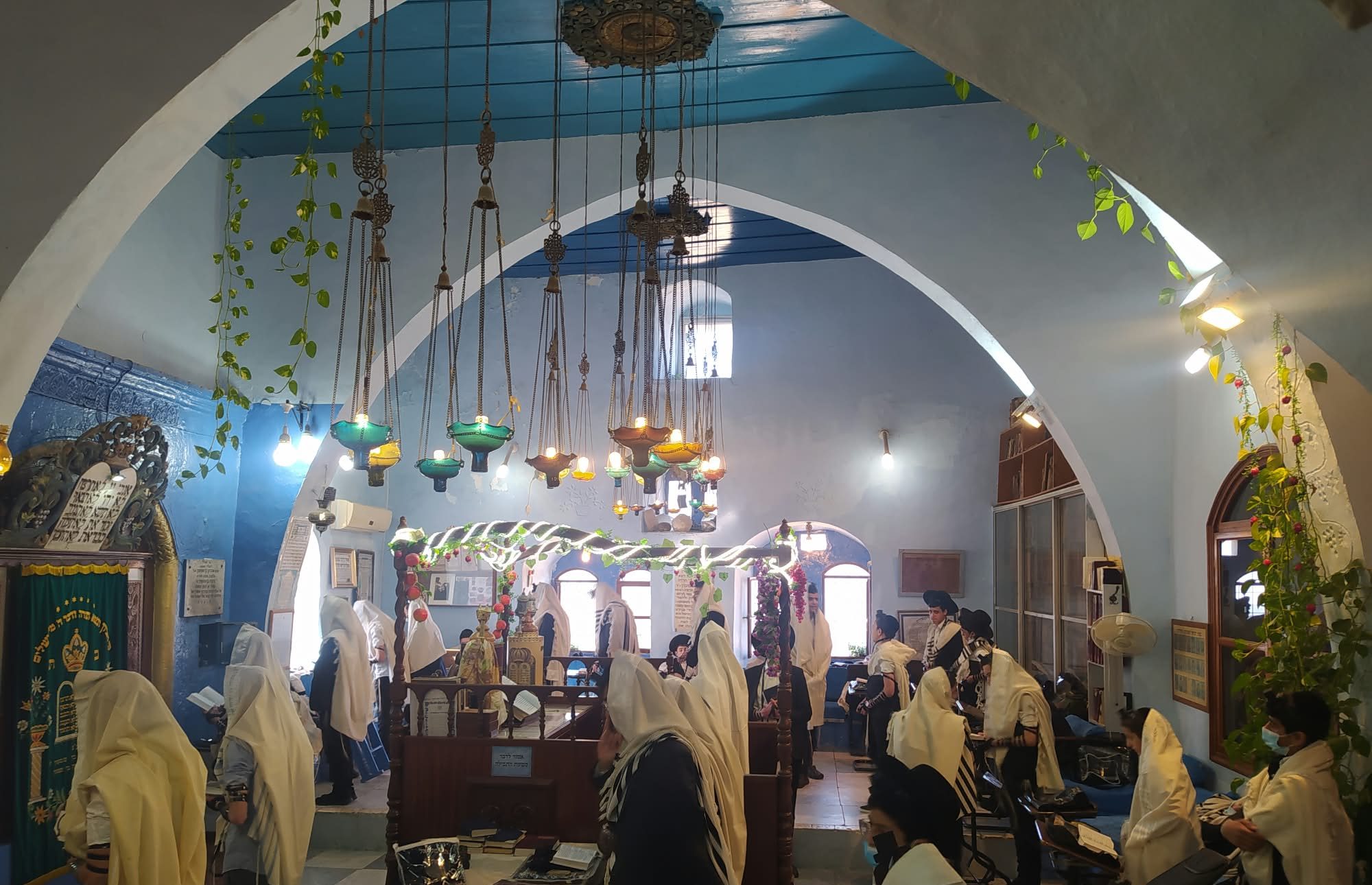
Look up: oil lamps hang from the deep blue wooden ceiling, and blue benches line the walls around the bimah, from which the Torah is read.
5. Fallen and rebuilt
Tzfat sits on a ridge prone to earthquakes. The great earthquake of 1759 destroyed much of the city, and the Galilee earthquake of 1 January 1837 levelled most of the Jewish quarter. Each time, the synagogue was rebuilt, so the walls around you are younger than the tradition they keep.
6. The voice on Shavuot night
Maran’s best-known story begins before he reached the Land. On Shavuot night, as he and his companions stayed awake learning, a voice spoke from his mouth: “I am the Mishnah.” It urged them to go up to the Land of Israel. Rabbi Shlomo Alkabetz, who was there, set it down in a letter, later printed in the introduction to Maggid Meisharim. Local tradition holds that the Maggid, his heavenly teacher, later came to him in a small room beneath this synagogue.
The Room Beneath the Synagogue →
7. The rocket in the window
In 2006, during the Second Lebanon War, a rocket fell just outside. A fragment of it hangs in a window beside the ark — a reminder that this ancient place belongs to a living city.
Help keep the lamps burning
Thank you for visiting Maran’s synagogue. It stays open to everyone who comes, and is cared for by its gabbai and community. If this place has moved you, you are welcome to share in its upkeep, or to dedicate a kiddush, a day of learning or a memorial.
Prefer a guide?
The gabbai leads tours by arrangement. Visit and book a tour →