בית הכנסת
The Synagogue
Five centuries of the beit midrash of Maran: earthquakes, rebuilding, Hasidic pilgrims, and what to look for when you visit.
The synagogue that bears Maran’s name stands on Beit Yosef Street in the Old City of Tzfat. By tradition it was his beit midrash — the house of study where he taught, judged and wrote. It has fallen and risen again more than once, and it has never stopped being a place of prayer and learning.
The beit midrash of Maran
When Rabbi Yosef Karo settled in Tzfat in the 1530s he soon became one of the community’s spiritual leaders. According to Tzfat tradition, his study hall in those days was on the upper storey of the building. There he taught his students and laboured over most of his books. His yeshiva carried on that of his teacher Rabbi Yaakov Beirav, and his disciples went on to head yeshivot of their own across the city.
A Yemenite traveller who visited on a Shabbat around 1567 left a rare eyewitness picture of the place: the aged sage seated on a chair, expounding the verse “The Torah of the Lord is perfect, restoring the soul” in its plain and its hidden meanings, before some two hundred students seated on benches. (Read the full account in Two Hundred on the Benches.)
The room of the Maggid
Beneath the synagogue, local tradition holds, is the small house where Maran lived — the room in which the Maggid, his heavenly teacher, came to him and revealed the secrets of the Torah. Visitors are shown a small underground chamber close to the synagogue. (See The Room Beneath the Synagogue.)
Earthquakes and rebuilding
Tzfat sits on a ridge prone to earthquakes, and its old synagogues carry the scars. The great earthquake of 1759 destroyed much of the city; the Beit Yosef synagogue was rebuilt afterwards on a smaller scale than before. Then came the catastrophic Galilee earthquake of 1 January 1837, which killed thousands in Tzfat and levelled most of the Jewish quarter. The synagogue was damaged again and rebuilt in the years that followed — sources date the work variously to around 1839 or later in the 1840s — and further restoration followed at the beginning of the twentieth century.
Tradition links the rebuilding after 1837 with the philanthropist Yitzchak Guetta, and one well-loved Tzfat legend says that he set aside half the money and buried it beneath the synagogue floor, to be found when the Messiah comes. (See When the Earth Shook.)
An inscription in the building records that a yeshiva named Etz Chaim was established “in the place of the master of the Beit Yosef” for the sages and rabbis of Tzfat, dedicated in the name of Rabbi Avraham Aysher.
A home for the Hasidim
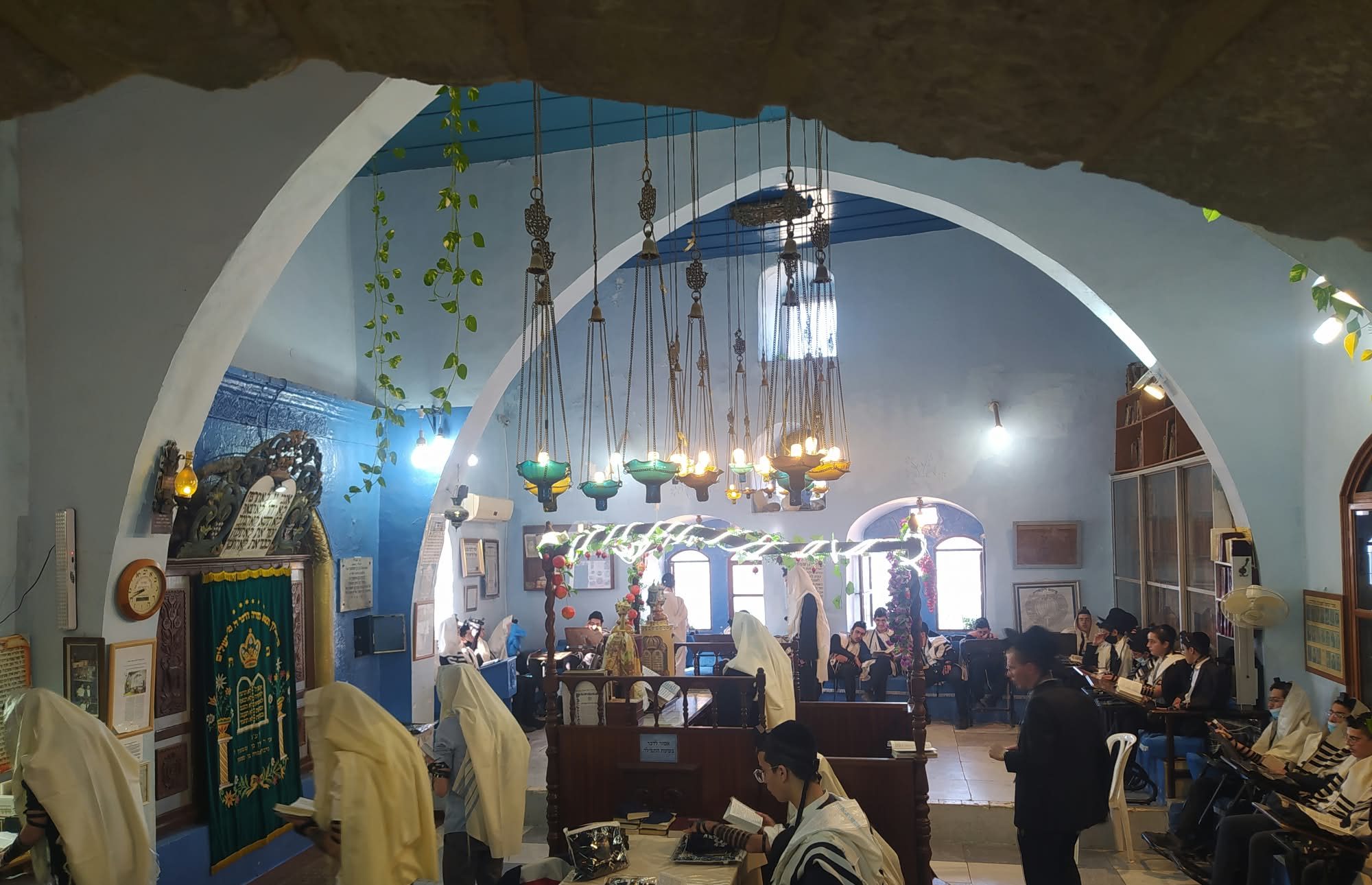
In 1777 a group of Hasidim led by Rabbi Menachem Mendel of Vitebsk arrived in the Land of Israel and settled in Tzfat. Until their own synagogue — the one later known as the Ari Ashkenazi — was ready, they prayed, as Rabbi Yisrael of Polotsk wrote in 1778, “in the Beit Yosef.” For a time, the Sephardi master’s study hall was the first home of the Hasidic movement in the Land of Israel. (See The Hasidim in the Beit Yosef.)
What to look for when you visit
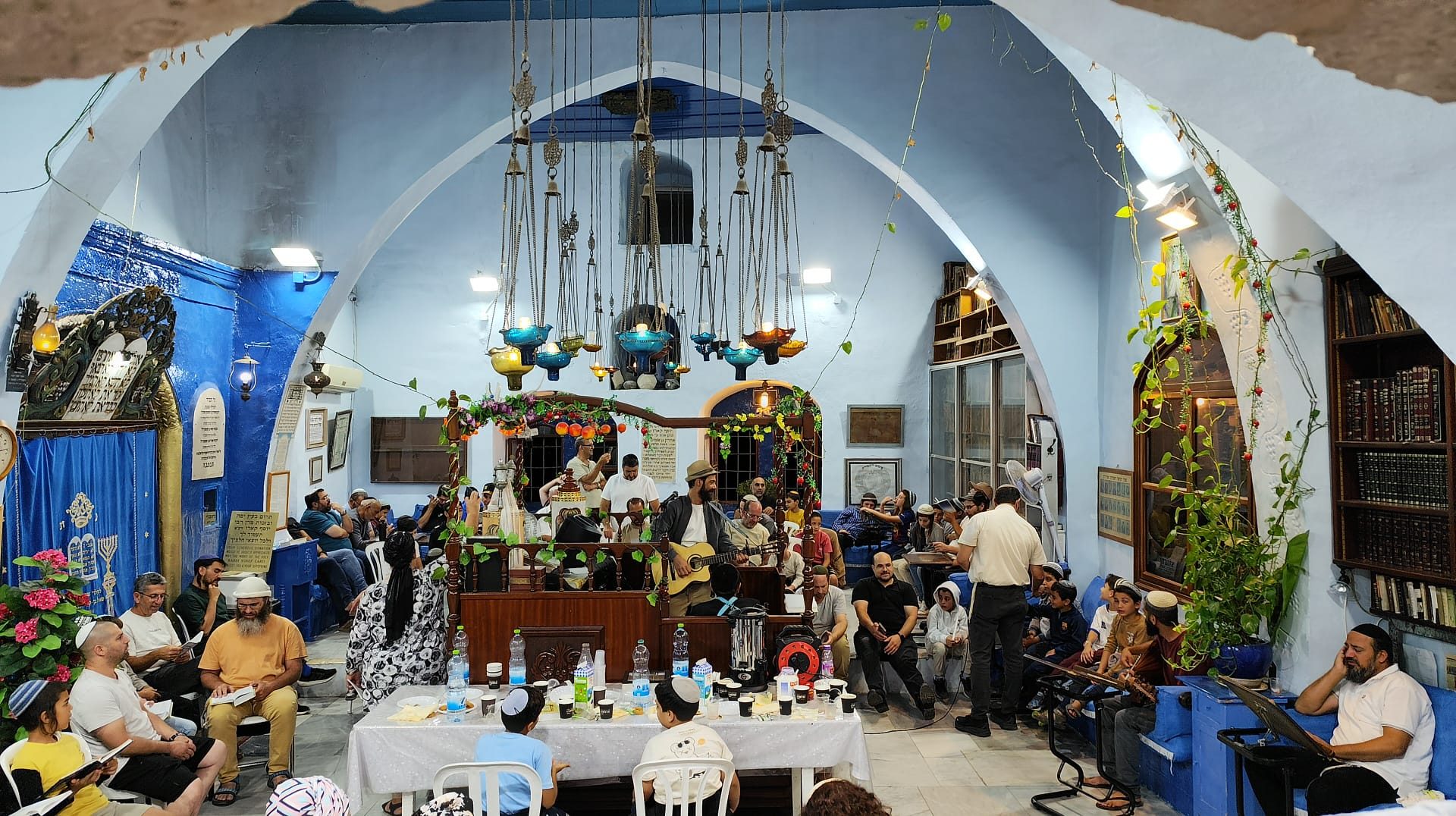
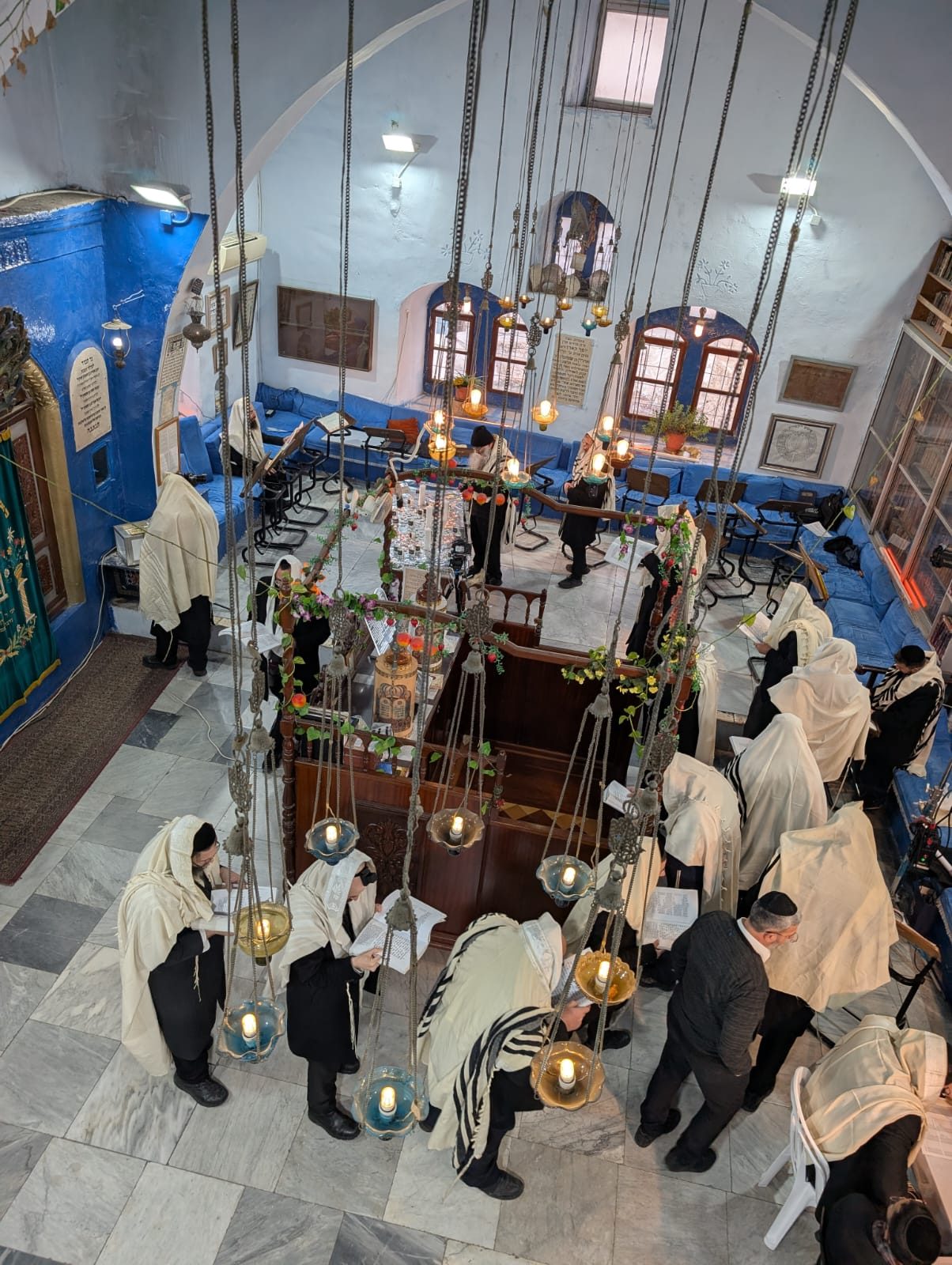
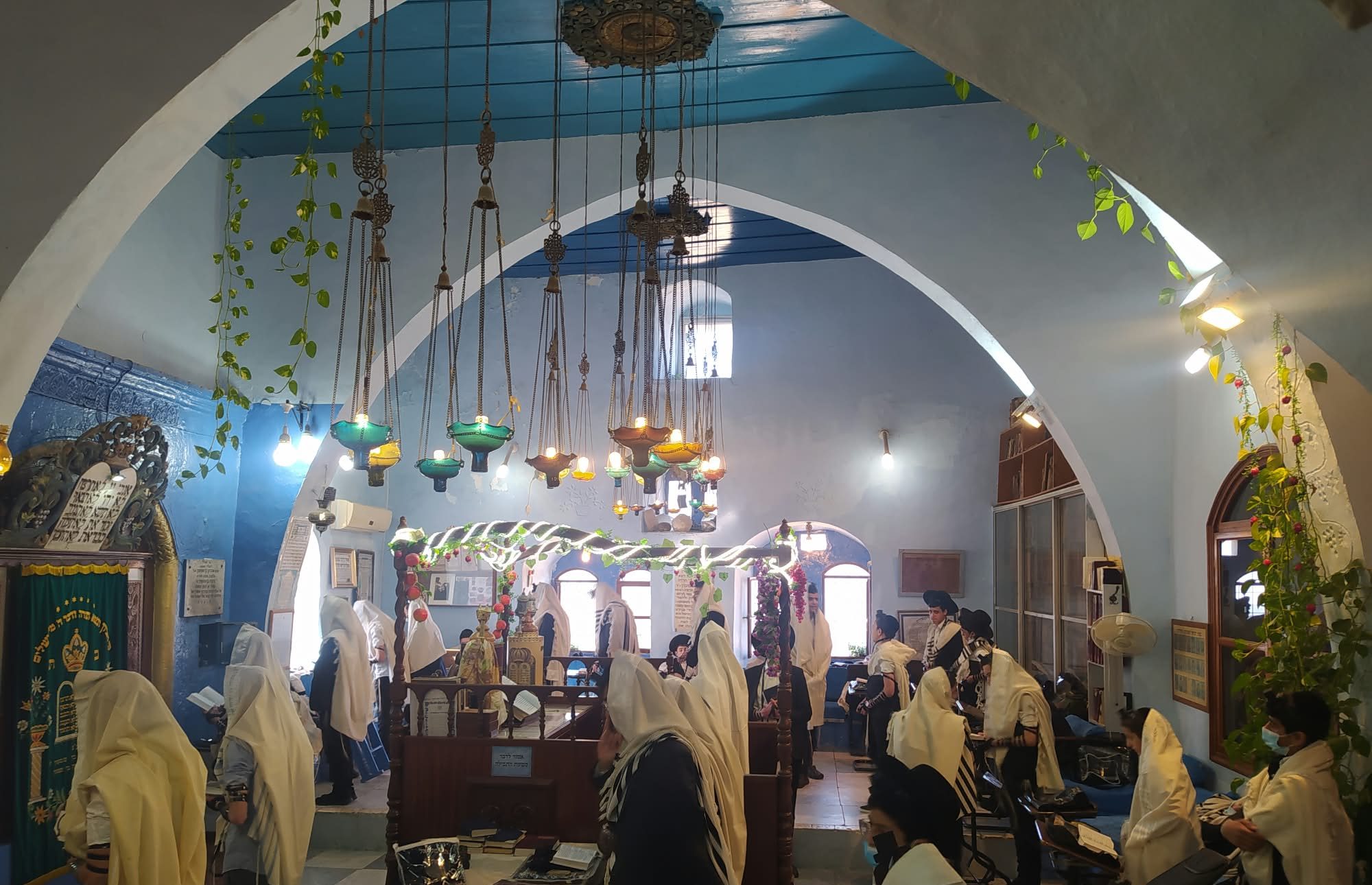
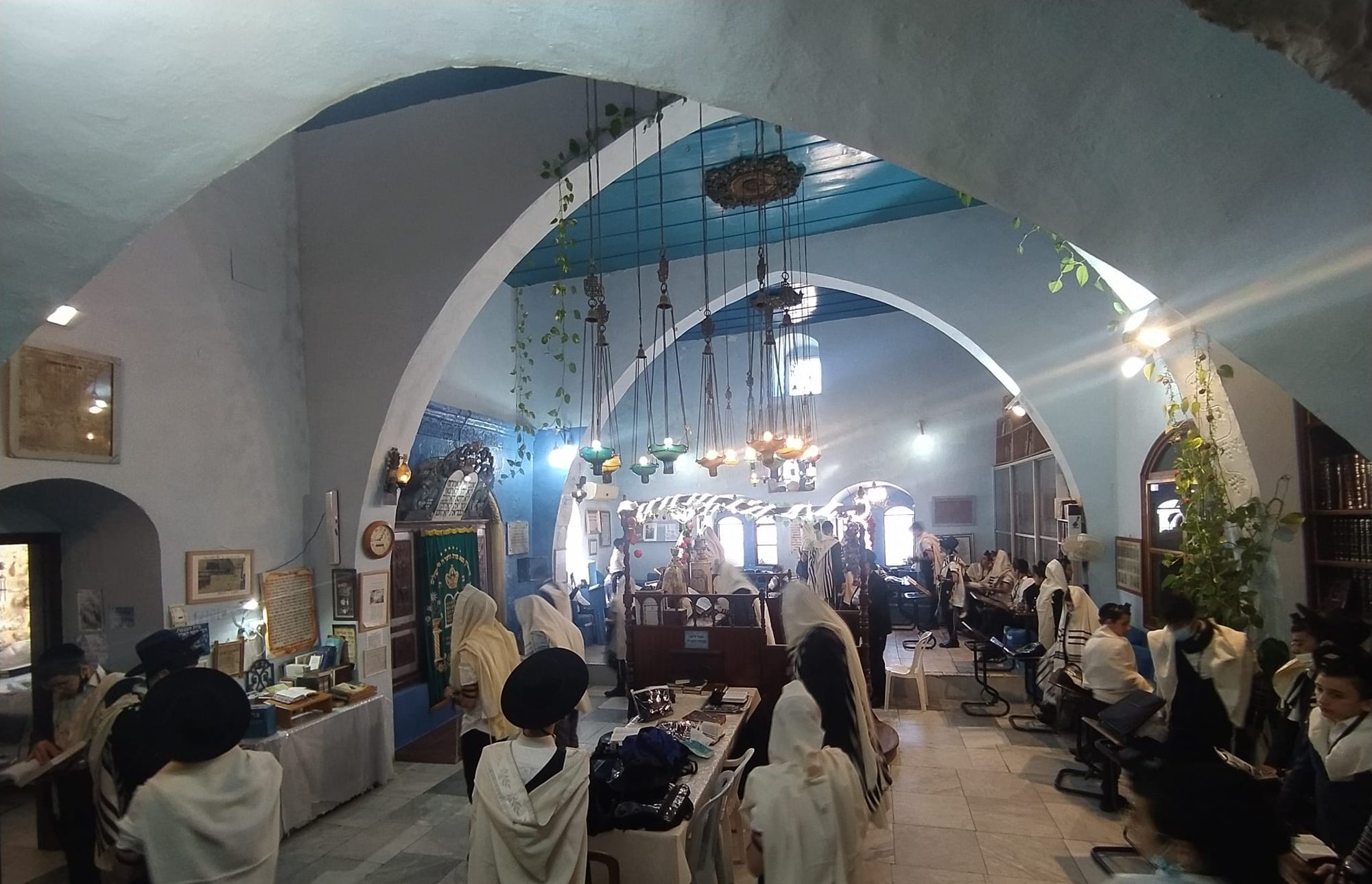
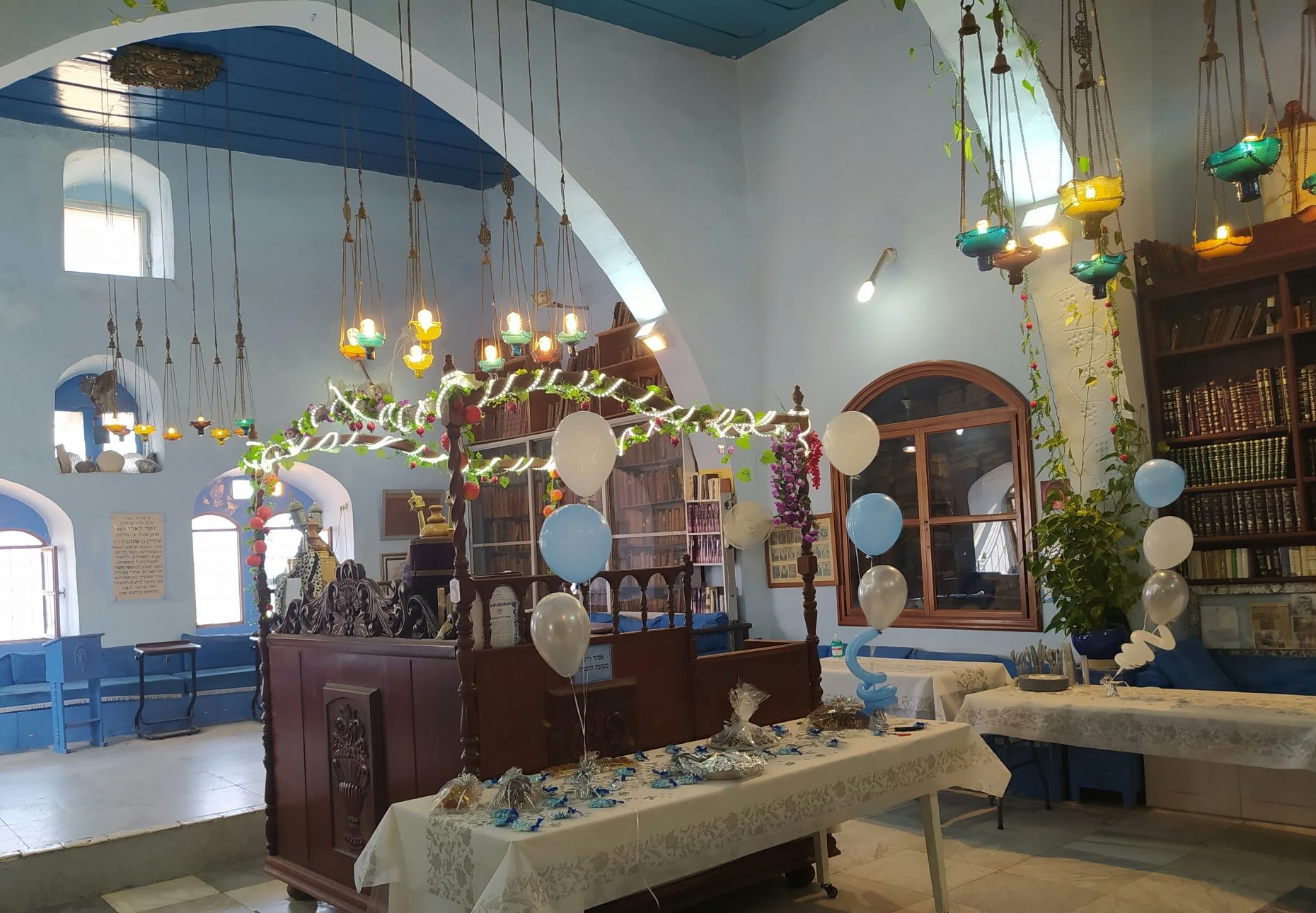
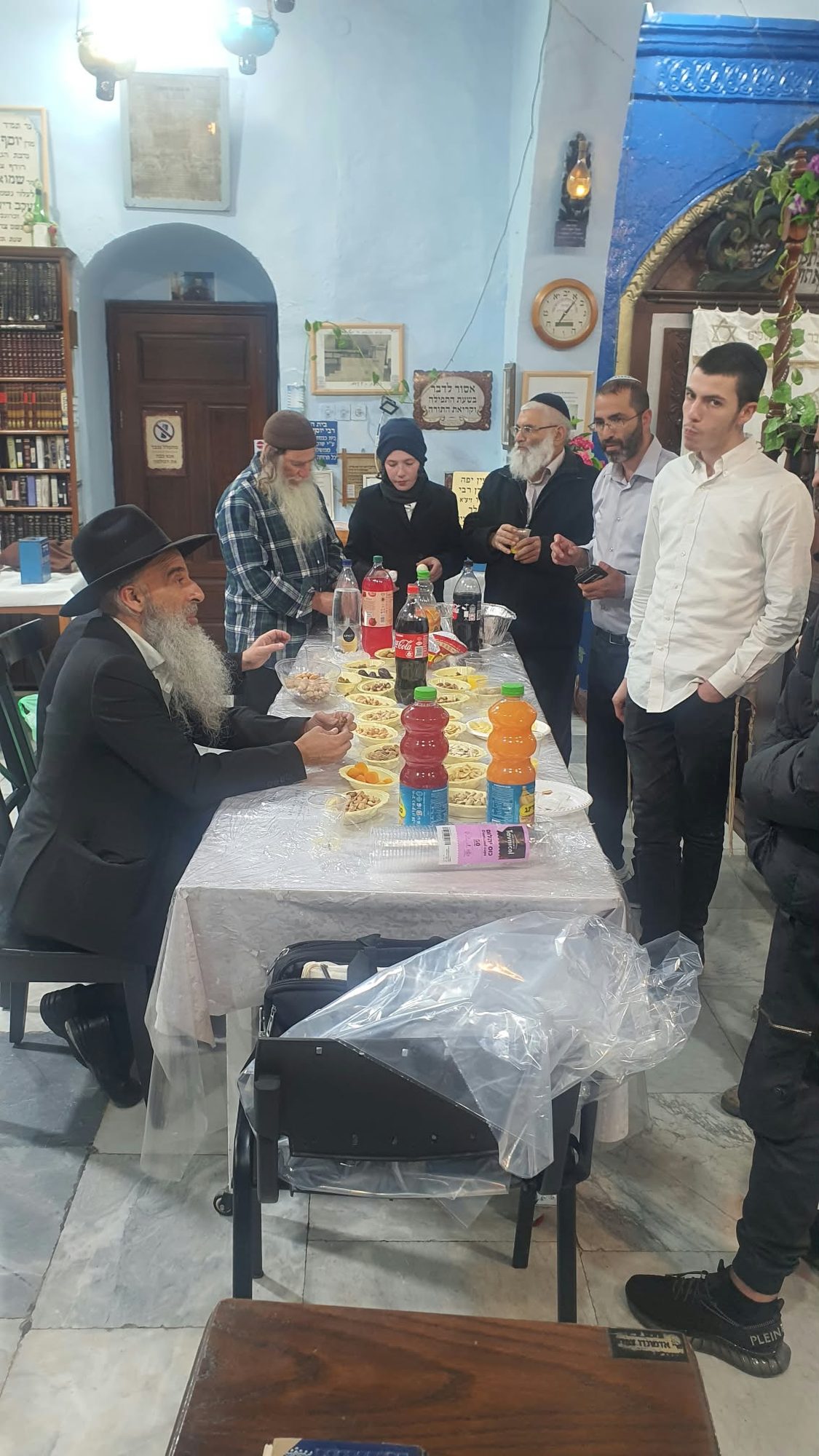
- The arches and lamps. The prayer hall is roofed with Middle Eastern arches, hung with lamps, and lined with old shelves heavy with holy books — some of them centuries old.
- The floor. Tzfat tradition notes the Italian marble tiles, laid so that no corner of one tile touches the corner of another.
- The window by the Ark. To the right as you face the Ark, the twisted remains of a Katyusha rocket hang in a window. It struck just outside the synagogue during the Second Lebanon War in 2006. (See The Rocket in the Window.)
- The room below. Ask the gabbai about the chamber of the Maggid.
- The street name. The lane outside is called Beit Yosef Street, after his great work.
Visiting with respect
This is a living synagogue. Please dress modestly — shoulders and knees covered — and men are asked to cover their heads; coverings are available at the door. Please keep voices low during prayers, and ask before photographing people. It is a long-standing custom to leave a small donation in the charity box, which helps to keep the synagogue open for everyone.